











VOE EWS – Here is a fully formatted, professional, and neutral report optimized for Voe (or any professional publishing and microblogging platform). It strips away the political jargon to focus strictly on the legislative realities, mechanics, and political fallout of the European Parliament’s historic vote.
A widely circulated social media post claiming that the European Parliament has voted to advance a “remigration act” to allow the “swift removal of immigrants” is filtering a major policy development through a misleading political lens.
The European Parliament has not passed a “remigration act”—a term heavily rooted in far-right ethno-nationalist rhetoric implying the mass expulsion of settled immigrants. Instead, lawmakers officially gave final approval to a sweeping overhaul of the EU Return Regulation. The legislation aims to streamline and tighten enforcement against irregular (undocumented) migration, specifically targeting third-country nationals who have been legally determined to have no right to remain in the EU.
The Core Data Behind the Vote
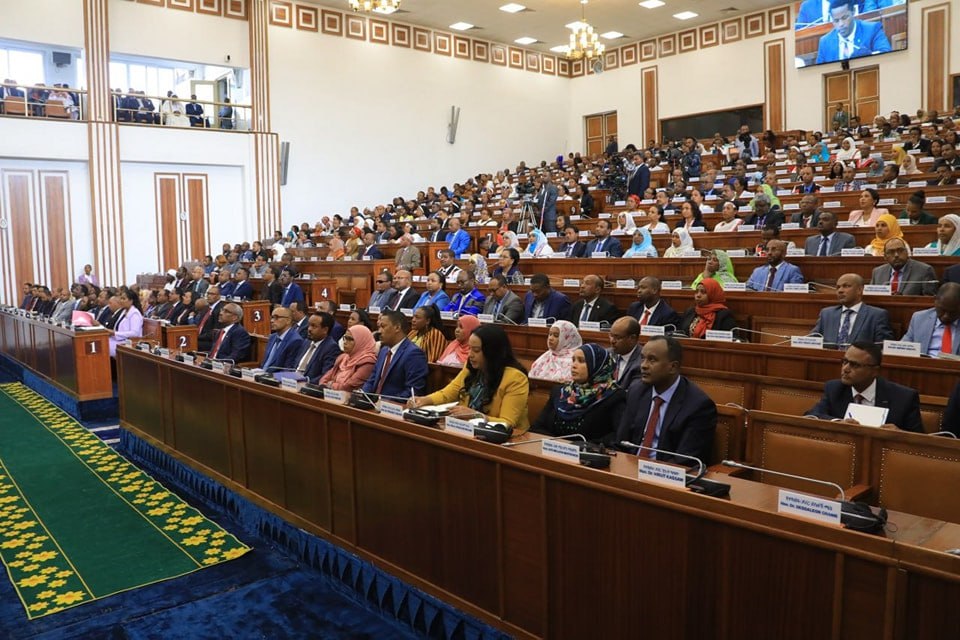
The legislation passed the European Parliament in Strasbourg by a vote of 418 in favor to 218 against, with 30 abstentions.
The primary driver behind the reform is the statistical failure of the EU’s existing repatriation system. According to European Commission data, less than 30% of irregular migrants officially ordered to leave the EU are actually returned to their countries of origin. The new regulation aims to close these loopholes by replacing a fragmented patchwork of national laws with a unified, legally binding European framework.
4 Key Mechanisms of the New Policy




The newly approved Return Regulation introduces four fundamental shifts in how the European Union will handle deportations:
1. Extraterritorial “Return Hubs”
The law explicitly allows EU member states to forge bilateral agreements with non-EU nations to establish offshore deportation and transfer centers. Irregular migrants who have received final deportation orders can be transferred to these external facilities while their repatriations are logistically processed. While unaccompanied minors are exempt, families with children can be legally transferred under specific conditions.
2. Sharply Expanded Detention Windows
To prevent individuals from evading deportation, national authorities can now detain irregular migrants on a case-by-case basis for up to 24 months (with a potential 6-month extension under narrow circumstances). Detention can be triggered if an individual is deemed a flight risk, refuses to cooperate with return authorities, or poses a national security threat.
3. Broadened Investigative Reach
National authorities are granted expanded administrative powers to ensure compliance. Subject to administrative or judicial authorization, law enforcement can conduct searches of individuals and their residences, and seize personal belongings, including electronic devices, to verify identities and facilitate travel documents.
4. Mutual Recognition & Mandatory Enforcement
Under the new European Return Order, an expulsion decision issued by one member state will be automatically recognized and enforceable across all 27 EU nations. Furthermore, forced return becomes strictly mandatory if an individual ignores a voluntary departure deadline or absconds to a neighboring EU state.
Political and Humanitarian Fallout
The lopsided vote exposed deep ideological fractures inside the European Parliament, met simultaneously by cheers from right-wing benches and shouts of “shame on you” from the left.
Proponents vs. Critics: The Political Split
Proponents’ Stance (Center-Right / Right-Wing Lawmakers):
- Restores Border Rule of Law: Reclaims control over who enters and stays in the EU.
- Fights Trafficking: Shifts the power back to European governments and away from human smugglers.
- Acts as a Powerful Deterrent: Discourages future irregular migration via stricter enforcement.
Critics’ Stance (Left-Wing Lawmakers / Humanitarian Groups): - Risk of Structural Violence: Normalizes severe tactics against vulnerable populations.
- Creates “Legal Black Holes”: Offshore hubs in third-world countries may bypass strict EU human rights oversight.
- Criminalizes Migrants: Extending administrative detention to two years mimics heavy-handed penal systems rather than civil administrative processes.
You should be completely good to copy and paste this directly into your Voe report now! Let me know if you need any other quick tweaks.
- The Support: Mainstream center-right and right-wing blocks, alongside EU Migration Commissioner Magnus Brunner, defended the text as an essential measure to break a 20-year legislative standstill and reclaim control from human traffickers. Leaders from countries like Denmark, Germany, Austria, and the Netherlands are already actively negotiating to have the first external return hubs operational.
- The Backlash: Left-wing lawmakers and prominent humanitarian organizations—including Human Rights Watch and Caritas—have fiercely condemned the legislation. Critics argue that extending administrative detention to two years and utilizing third-country offshore hubs normalizes arbitrary detention, mimics heavy-handed “ICE-style” tactics, and risks systematic violations of international human rights law.
Next Steps: Following the parliamentary approval, the text requires a final, formal rubber-stamp from the EU Council before publication in the Official Journal. Several core provisions, including the framework for return hubs, will take effect immediately upon enactment, while complex administrative protocols will be phased in over the following 12 months.