BY SOLOMON DIBABA ————————————————–
The international law of the sea establishes principles and mechanisms so that landlocked countries can have access the sea and integrate into the global maritime system. In this regard, Ethiopia’s resolve to have access to sea in the neighboring countries based on mutual benefits and respect is legitimate.
To this end, Prime Minister Abiy Ahmed emphasized the importance of discussions on sea ports with leaders of neighboring countries. Discussion among leaders of the region will further consolidate socioeconomic cooperation and durable peace in the Horn of Africa.
Ethiopia’s accession to ports is an important component of its socio-economic, diplomatic, political, historical and socio-cultural development.



First, Ethiopia’s strategic and geostrategic location and proximity to the Red Sea, linking the Mediterranean Sea with the Indian Ocean, Middle East, Persian Gulf and Far East countries. Ethiopia is at close proximity with major important ports the region.
On the other hand, a significant portion of the global fossil fuel trade is being transacted through the Red Sea which makes access to ports on the Red Sea highly critical for Ethiopia.
Second, access to ports has a critical bearing on the national security of Ethiopia. Given the power rivalry on the Horn of Africa, Ethiopia cannot be indifferent to any level of threats to the national security, peace, sovereignty and territorial integrity. Ensuring national security as an important diplomatic, political and economic center linking to the Horn and the rest of Africa, the issue of access to ports to Ethiopia peacefully and through negotiations, “ is not a matter of luxury but a question of survival” according to a recent presentation Prime Minister Abiy Ahmed delivered to members of the parliament (MPs).
Third, having access to ports would enable Ethiopia to share its own natural resources with Africa and the rest of the world thus contributing to the global economic development in the context of BRICS, Belts and Roads Initiative, Agenda 2063, AfCfTA and African economic integration. And fourth, access to ports will further promote Ethiopia’s cultural and historical relations with coastal countries.
Fifth, Ethiopia has now reestablished its national naval force, with accessing ports in partnership with Red Sea littoral states, where the nation can contribute to the protection of safety of commercial ships by combating sea piracy and sea terrorism.
Sixth, unfettered access to the Red Sea will enable Ethiopia to export its processed and semi-processed agricultural products, minerals etc. and import manufactured goods, IT products and other commodities.
Seventh, Ethiopia will further enhance her political assertiveness among countries in the world and Africa in particular to advocate for pan Africanism through which African countries can use their own resources for development and build their national economies.
So, the issue of ports is a matter of concern for the nation—i.e. the entire citizenry here and overseas. This writer would like to conclude this article with quotes from Prime Minister Abiy’s presentation:
“Ethiopia is endowed with population, resources and skilled manpower. There are some remaining things that should be addressed through time. However, this matter prevents Ethiopia from acquiring its place and position in Africa. We need access to the sea. We need the Red Sea. We need Indian Ocean. However, it is important to explore options. Is our option one and only one? It is important to explore alternatives by inquiring the type of options as it will enable us to comprehend the matter better.”
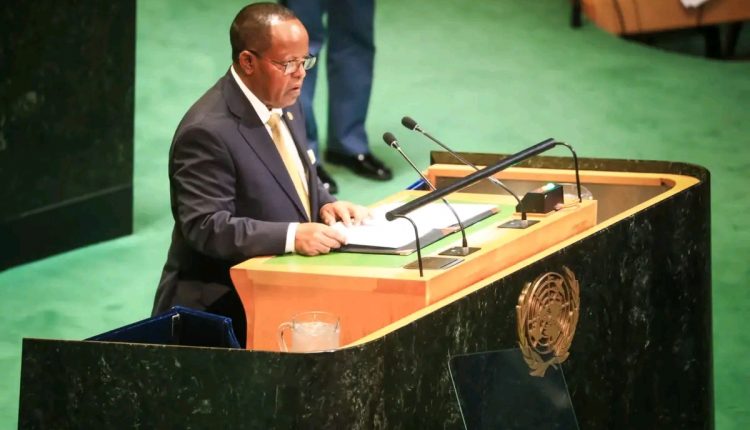
- President Taye champions Africa’s dev’t and regional transformation with GERD at UNGA 80In a comprehensive address to the 80th session of the United Nations General Assembly in New York, President Taye Atske-Selassie of… Read more: President Taye champions Africa’s dev’t and regional transformation with GERD at UNGA 80
- Two African countries refuse to recognise Palestine. Here’s whyAt the United Nations General Assembly this week, one country after another rose to declare its recognition of a Palestinian state.… Read more: Two African countries refuse to recognise Palestine. Here’s why
- UN Chief Stresses Need for Countries to Adopt Climate-smart Food Policies to Reduce Reliance on Food ImportsUN Secretary-General Antonio Guterres stressed the need for countries to adopt climate-smart food policies and enhance private sector participation to reduce… Read more: UN Chief Stresses Need for Countries to Adopt Climate-smart Food Policies to Reduce Reliance on Food Imports
- Puntland Intercepts Cargo Ship Carrying Weapons To MogadishuByMI News Network Authorities in Somalia’s semi-autonomous Puntland region have intercepted a cargo vessel which was carrying a massive consignment of… Read more: Puntland Intercepts Cargo Ship Carrying Weapons To Mogadishu
- Burkina Faso ruling junta dissolves independent electoral commissionThe Burkinabe government adopted a bill on Wednesday at the Council of Ministers to dissolve the Independent National Electoral Commission (CENI).… Read more: Burkina Faso ruling junta dissolves independent electoral commission