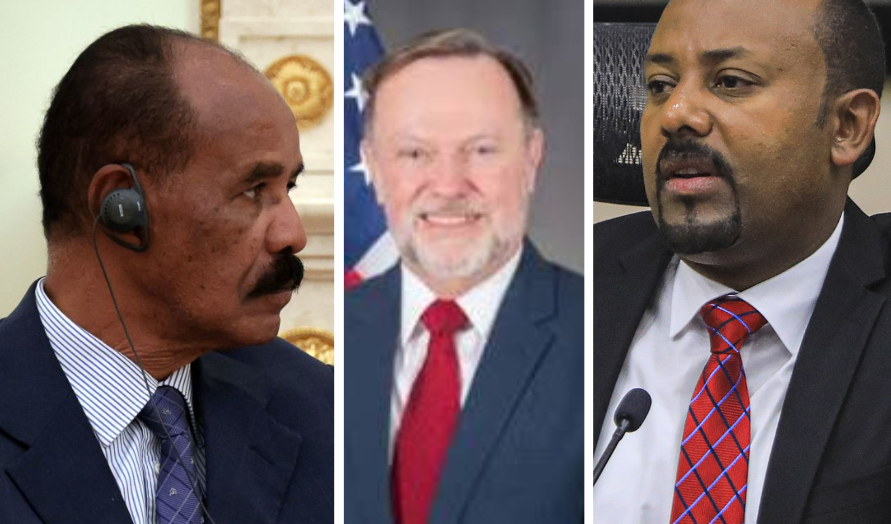
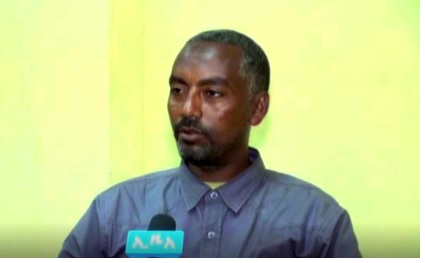



Irwa to the right of Meles: Mekelle 1991
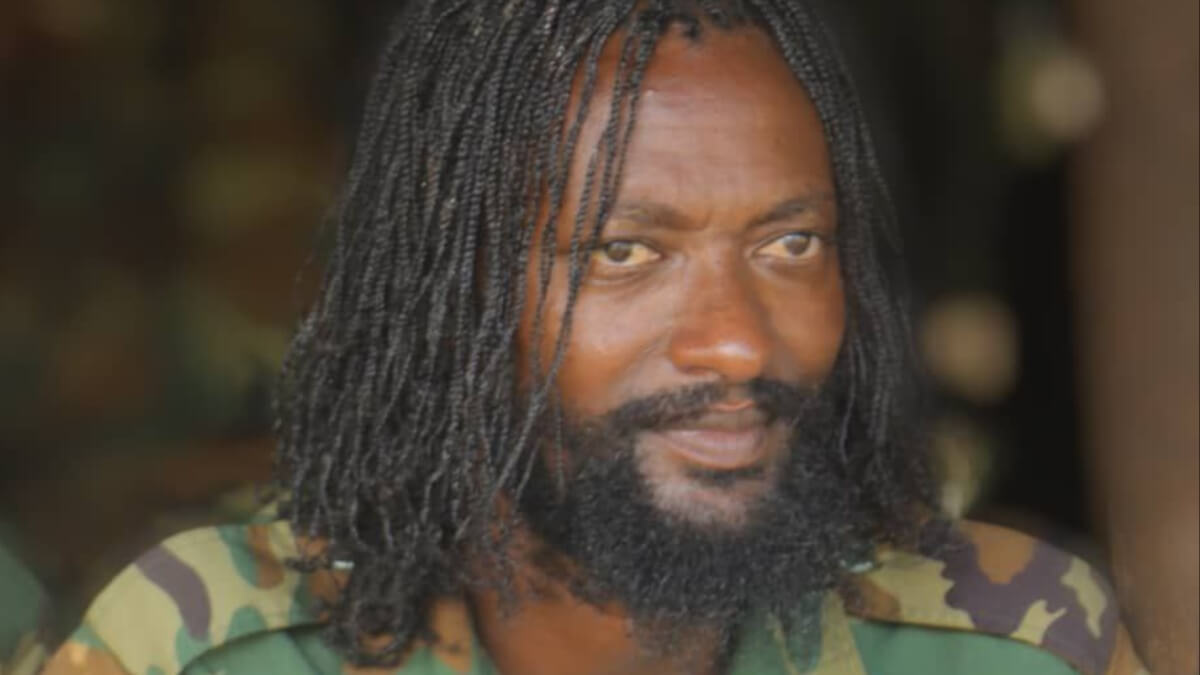
In six episodes of YouTube videos Al Fateh Irwa, has documented his testimonials on his role in the Horn of Africa. He is a seasoned intelligence professional from Sudan, who claims to have played a pivotal role in shaping the geopolitical landscape of the Horn of Africa, particularly Ethiopia, during the late 1980s and early 1990s. His career spanned various regimes in Sudan, starting with President Numeri’s rule (1969-1985) and extending into President Omer Al Bashir’s era (1989-2005). Initially part of the Sudanese army, Irwa transitioned to the Foreign Intelligence Department of the Sudan National Security Agency in 1976. His focus was primarily on Ethiopia, but his expertise also took him to Moscow for a year (1977-1978), where he engaged in intelligence operations, including recruiting Ethiopian officers.

Irwa’s tenure included a significant diplomatic assignment as a security officer at the Sudanese Embassy in Addis Ababa from 1980 to 1984. Following the dissolution of Sudan’s National Security after Numeri’s overthrow in 1985 and a brief imprisonment, he worked in Saudi Arabia, advising on Horn of Africa affairs and advocating for support of the Eritrean People’s Liberation Front (EPLF) and the Tigray People’s Liberation Front (TPLF). He says the TPLF had an office in Saudi Arabia but he helped promote their presence there. , Irwa advised Saudi Arabia against supporting ELF factions, asserting their nationalist and Arabist stance would not lead to Eritrea’s liberation. He argued that their efforts would be futile, even over a span of 600 years.
Recalled by Al Bashir in 1989, Irwa resumed his intelligence role, later ascending to state minister in the president’s office and special advisor on intelligence. Despite challenges, including conflicts with Islamist leaders over their support for Eritrean and Ethiopian Islamist groups, he maintained influential connections, facilitating discussions between leaders like Isaias, Meles, and Islamist ideologue Hassen Al Turabi.


Irwa’s strategic vision for the Horn of Africa, particularly Ethiopia, culminated in a policy formulated in 1990 that aimed at regime change and the establishment of a decentralized Ethiopian state. Their aim was to weaken Ethiopia contrary to the Egyptians who wanted Ethiopia’s disintegration. His illustrious career also saw him serve as State Minister at the Ministry of Defence in 1995 and as Sudan’s delegate to the United Nations from 1996 to 2005, navigating complex international dynamics including sanctions and legal challenges.
Connections to Eritrean and Ethiopian oppositions organizations
Al Fateh Irwa recounts his early interactions with Eritrean and Ethiopian opposition organizations. He described the Eritrean Liberation Front (ELF), as a leftist group with connections to the Soviet Union, comprising nationalist and Arab-oriented factions like those led by Osman Sabbe. According to Irwa, while most Arab countries favoured the ELF, the Eritrean People’s Liberation Front (EPLF) aligned more with Chinese leftist ideologies, finding limited Arab world support, primarily in Kuwait. As a personal note, when the ELF observed that Khalifa Kerar of Sudan’s General Security Agency, favoured and promoted the EPLF, the ELF leadership tried to gain Kerar’s favour with ordinary unexpensive gifts, he pointedly showed them a new Land Cruiser, indicating it was a gift from the EPLF, highlighting the competitive dynamics between these groups.
Irwa’s connections extended to Ethiopia, until 1984 when he was declared persona non grata in retaliation for Sudan’s expulsion of an Ethiopian security officer. During his period in Ethiopia he recruited numerous Ethiopian military officers and developed strong ties with Ethiopian armed opposition, especially the Tigray People’s Liberation Front (TPLF). Convinced of Ethiopia’s threat to Sudan, particularly due to its support for the Sudan People’s Liberation Movement (SPLM), Irwa advocated for weakening Ethiopia to induce regime change favourable to Sudan. He sought a decentralized Ethiopia with autonomous nationalities, countering Amhara dominance, rather than Ethiopia’s disintegration. He believed the TPLF and EPLF were key to achieving this regime change in Ethiopia.
On Isaias Afwerki
Al Fateh Irwa’s depiction of Isaias Afwerki paints a picture of a fearsome and uncompromising leader. According to Irwa, Afwerki’s reputation as a brutal dictator was well-known, and he commanded fear even among his closest associates, unhesitatingly quashing any opposition to his ambitions.
Irwa recounts a visit to EPLF-controlled areas in 1990, where he experienced Afwerki’s intimidating presence first-hand. During a dinner at an underground guest house in Amberbeb, a disagreement between Ali Seid Abdella and Mohamed Ali Omaro was abruptly silenced by Afwerki’s stern command, ‘Shut Up’ demonstrating his authoritative control over his colleagues. Irwa notes that even in the presence of a guest, Afwerki’s scolding was fierce, leaving no room for apology.
The narrative continues with the ‘Peace and Democracy conference’ in Addis Ababa in July 1991. Irwa recalls a conversation with Afwerki at the State Guest house, where Afwerki, in a reflective and intoxicated state, lamented inheriting a barren Eritrea in contrast to the TPLF’s lush and green Ethiopia. Afwerki expressed regret for not heeding Paul Hentz’s early advice to aim for control over all of Ethiopia rather than just Eritrea, revealing his broader ambitions.
Irwa also shares an incident where Afwerki publicly humiliated Haile Menkerios, a Harvard-educated colleague, during a meeting, dismissing the value of his education compared to the ‘real Harvard’ of field experience. Afwerki’s complex relationship with the TPLF, as described by Irwa, was marked by a sense of paternalism and rivalry, contributing to his eventual decision to go to war with them. His animosity towards the Amhara was also notable during this period.
Irwa recalls the events surrounding Eritrea’s independence in 1993, highlighting Afwerki’s refusal to allow Prince Turki Al Faisal of Saudi Arabia to attend the celebrations, despite Sudanese presidential intervention. Afwerki’s dismissive stance towards international diplomacy, preferring to engage with ‘masters’ in the USA or Israel rather than intermediaries, further underscores his assertive and often confrontational approach to foreign relations.
On Meles Zenawi
Al Fateh Irwa offers a highly favourable assessment of Meles Zenawi, depicting him as an exceptional leader. He praises Meles for his intelligence, strategic thinking, and dedication to his cause, describing him as far-sighted, humble, and friendly. Irwa notes the strong relationship that developed between Meles, Sudanese President Al Bashir, and himself, highlighting their close friendship. He recalls participating in preliminary meetings in Mekelle with both Isaias and Meles, planning the ‘Peace and Democracy’ Conference that was later held in Addis Ababa, which he also attended.
On The Sudanese role in arming and advising the EPLF and TPLF
Regarding the Sudanese role in supporting the Eritrean and Tigrayan liberation movements, Irwa shares his initial involvement with the Ethiopian Democratic Union (EDU) led by Ras Mengesha. However, he quickly shifted his support to the Tigray People’s Liberation Front (TPLF), seeing it as the most viable force against Mengistu’s regime. He asserts that Sudan sourced weapons from China to arm both the EPLF and TPLF and provided military advice for their offensives.
As the geopolitical landscape shifted with the Soviet Union’s support moving from Somalia to Ethiopia, Irwa describes Ethiopia becoming a significant threat to Sudan, which was allied with the West. This situation was compounded by interventions from southern Yemen and Libya, which supplied arms to Ethiopia and the SPLM, destabilizing the region further. He details a covert operation in 1984 where Sudanese intelligence, posing as opponents of the Numeiri regime, duped Libya into supplying weapons that were then used by the Sudanese military.
The rivalry between the EPLF and TPLF posed a challenge to Sudan’s objectives, leading to efforts to reconcile the two groups. Irwa underscores the mutual assistance between these organizations and Sudan in countering the SPLM, heavily supported by Ethiopia. He recalls the deployment of two EPLF divisions to Sudan to combat SPLA fighters in Kurmuk and drive them back To Beni Shangul in 1990.
Under the civilian government of the Umma Party led by Al Sadig Al Mahdi in 1986, Sudan’s policy shifted. The Umma Party’s historical ties with Ethiopia and animosity towards Eritreans led to a decline in support for the liberation movements and increased Ethiopian aid to the SPLM. Irwa mentions a plan by the Interior Minister, Mubarek Al Fadel, to arrest Isaias Afwerki and extradite him to Ethiopia, reflecting the changing dynamics during the civilian government’s rule.
Irwa also discusses the TPLF’s strategic shift from advocating Tigray’s self-determination to seeking control over the Ethiopian state. He recalls a critical moment during the TPLF’s final offensive on Addis Ababa, facing a severe shortage of tank ammunition. Persuading President Omer Al Bashir to supply the TPLF from Sudan’s border reserves, despite military reservations, significantly aided their advance. Omer Al Bashir later convinced them saying, “ We have all the tanks on the border to fight against the Habesh and the TPLF are now doing this job for us.” Sudan’s swift recognition of the TPLF regime in Ethiopia following their victory underlined the depth of their support.
He recalled that Eritrean forces entered Addis with the Tigrayan forces and played an important role to secure Addis, he added that the Eritrean community in Addis was bigger and well organised than its Tigrayan counterpart. Thus, Eritreans knew Addis very well. He travelled to the London conference together with Isaias and Meles. He said the aim of the negotiation with the Derg government was meant to keep the negotiations until there was nothing to negotiate about. This was later what happened when EPLF took Asmara and TPLF Addis.
He came back from the London Conference with Meles in a charter plane. As Meles was keen to go to Addis quickly to assert his TPLF’s rule. He piloted a Sudanese Cessna plane with five seats to take Meles, Sium Mesfin, Fessaha Afwerki, AliMireh Hanfare and an Amhara dignitary to Addis. When they landed at Addis Ababa airport they were received by Kinfe Gebremedhin, TPLF’s Security Chief. later took Meles in a plane to Mekelle and Isaias arrived from Asmara and the three planned the preparations for ‘Peace and Democracy Conference’. He later took Isaias to Axum where they visited the main church there and later took Isaias to back to Asmara and came back to Mekelle to take Meles back to Addis. He attended the deliberations of the conference in Addis. He also had strategic discussions with Meles and Isaias.
On the US relations with the EPLF and the TPLF
Al Fateh Irwa recounts that initially, the United States showed little interest in establishing relations with the Eritrean People’s Liberation Front (EPLF) and the Tigray People’s Liberation Front (TPLF), viewing them as leftist organizations. Despite his advisories, the U.S. continued to support the Ethiopian Democratic Union (EDU), even after he warned them of EDU’s infiltration by Mengistu’s regime. This oversight led to a significant setback for the U.S. when Ethiopian forces exposed and expelled the EDU.
Irwa notes that the EPLF had earlier begun cultivating ties with American entities, possibly aided by American and Israeli lobbying efforts. However, the U.S. only expressed significant interest in the TPLF as they were advancing towards Asmara and Addis Ababa. Herman Cohen from the U.S. approached Sudan to facilitate meetings with the leadership of both organizations. These leaders agreed to meet but insisted the meetings occur in Khartoum under the observation of Sudanese security, to demonstrate their transparency and respect for Sudan.
On The Oromo
Regarding the Oromo people, Irwa states that the Sudanese security saw them as the largest but most oppressed ethnic group in Ethiopia, unable to independently effect regime change due to divisions along religious, geographical, and cultural lines. Despite this, Sudanese security was keen on assisting the Oromo in their resistance against the regime. The tensions between the TPLF and the Oromo Liberation Front (OLF) were notable, especially after the TPLF formed the Ethiopian People’s Revolutionary Democratic Front (EPRDF), which included the Oromo People’s Democratic Organization (OPDO), created from Derg soldiers captured by the TPLF. Although the OLF historically had more Oromo support, the OPDO proved more effective, leading Sudan to work towards reconciling these groups to contribute to the downfall of Mengistu’s regime.
Relations of TPLF and the Islamist regime after 1991
According to Irwa the relations between Meles and Al Bashir were excellent. They consulted on important regional issues and the TPLF opened their depots of weapons to the regime in Sudan to help them fight the SPLM. The Sudan also brought army boots and uniform from Sudan sometime for money but most of the time free. He also recalls an incident in 1992 where a unit of the TPLF stationed in Gambella and led by Tadesse Werede, current leader of the Tigray defence Forces, helped them to control an important SPLM outpost inside South Sudan.
Sudan’s Islamic regime links to the apartheid regime of South Africa
In one of the episodes Irwa narrated that Sudan under Numeri had relations to the security services in Apartheid South Africa, where both exchanged information. This relationship extended to close relations as South African regime helped Sudan to repair and maintain its aircraft, after the relationship deteriorated with the US. Irwa was the link where he travelled to South Africa from time to time and even met the president, de Klerk in one of those meetings.
Posted by Hedgait