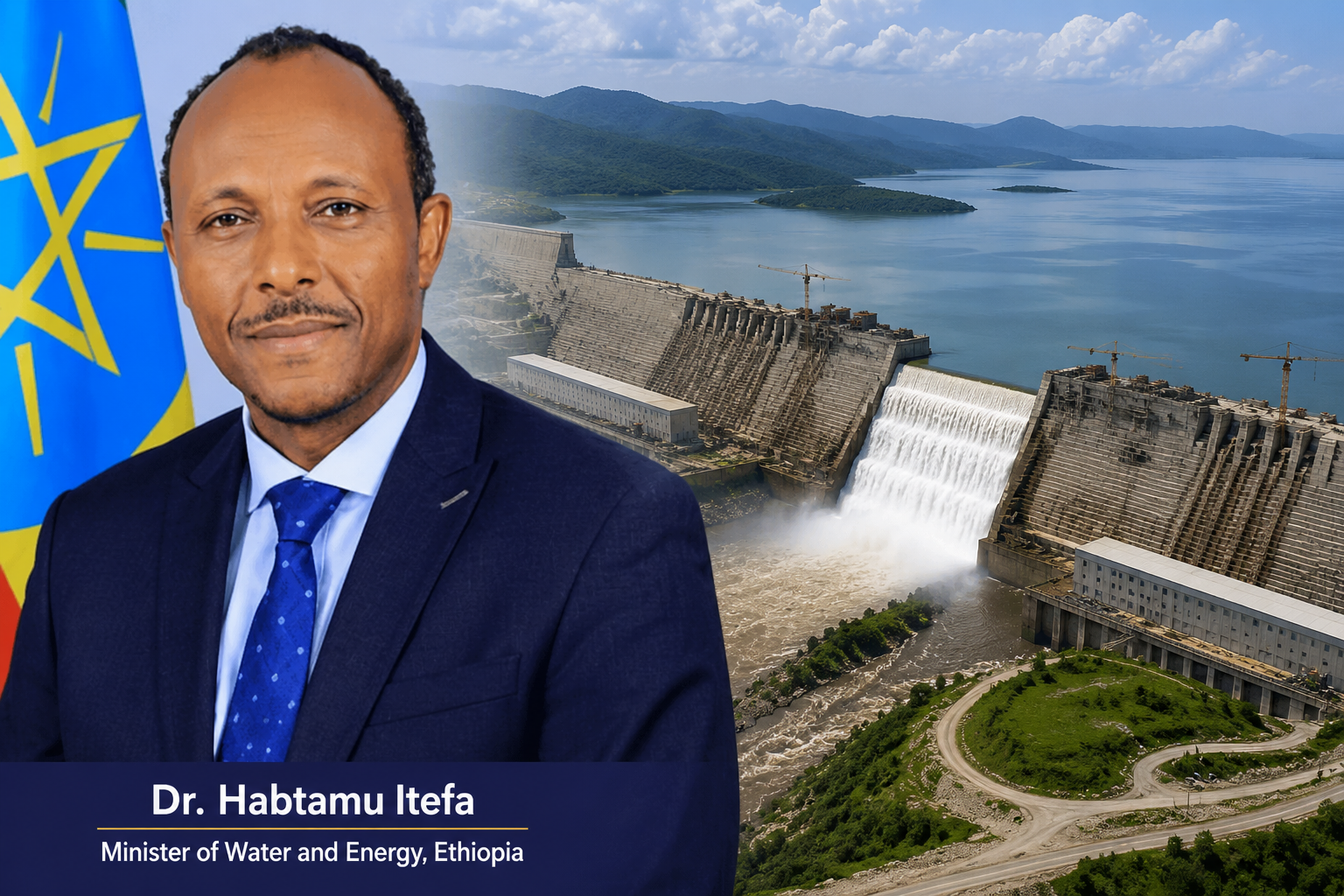
In the end, Ethiopia remains committed to peaceful and equitable solutions, but we will not be deterred by coercion or unjust demands. The GERD is a testament to Ethiopia’s resilience and unity—a project that transcends political divisions and secures a brighter future for generations to come.
The time for just and fair utilization of the Nile is now. Ethiopia will not be deterred.
Statement by the National Movement of Amhara (NaMA) on Ethiopia’s Sovereign Right to Equitable Utilization of the Nile
The National Movement of Amhara (NaMA) reaffirms Ethiopia’s inalienable right to develop its natural resources, including the waters of the Nile, for the advancement of its people. Ethiopia’s pursuit of energy security, agricultural modernization, and industrialization through projects such as the Grand Ethiopian Renaissance Dam (GERD) is not only legitimate but essential for national progress and regional stability.


However, Ethiopia’s development aspirations continue to face unjust obstruction from Egypt, which clings to an archaic and exclusionary colonial-era mentality. The 1929 and 1959 Nile Waters Agreements, imposed during the time of colonialism and imperialism, unjustly denied Ethiopia and other upstream nations their rightful share of the Nile’s resources. These obsolete treaties have no legal or moral standing under contemporary international law, particularly the United Nations Convention on the Law of the Non-Navigational Uses of International Watercourses (1997), which enshrines the principles of equitable and reasonable utilization. Therefore, the Egyptian allegations against the Ethiopian Grand Ethiopian Renaissance Dam (GERD) are unsupported by facts, international treaties, or customary international laws.
There is no precedent in the sharing of transboundary rivers among riparian nations that aligns with the unilateral modality Egypt demands from Ethiopia. Virtually all Egyptian diplomatic, governmental, or media communiqués regarding Ethiopia’s right to develop its fair share of the Nile have been backed by unjust references to these defunct colonial-era treaties, which were drafted and agreed upon with the utter exclusion of Ethiopia, to the total alienation and detriment of its legitimate rights.
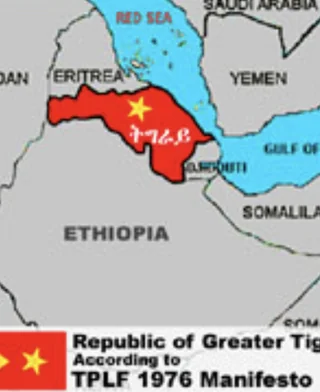
It is a well-documented fact that Egypt has actively engaged in fueling security menaces, including militating secessionist movements, anti-Ethiopian narratives, negative geopolitical smear campaigns, and propaganda against Ethiopia. There are glaring evidences of Egypt agitating and sponsoring armed violence and discord within Ethiopia, often brewed under the auspices of Egyptian governments.
Ethiopia’s progress will not be held hostage by Egypt’s outdated, unjust, and baseless claims over the Nile. For Ethiopia, the development of the Nile is not merely an economic imperative but a matter of national security. Successive Egyptian rulers have persistently posed security threats against Ethiopia since time immemorial, aimed at curtailing any possibility or capability for Ethiopia to advance development efforts on the Nile River. It is a well-documented fact that Egypt has actively engaged in fueling security menaces, including militating secessionist movements, anti-Ethiopian narratives, negative geopolitical smear campaigns, and propaganda against Ethiopia. There are glaring evidences of Egypt agitating and sponsoring armed violence and discord within Ethiopia, often brewed under the auspices of Egyptian governments.
Failing to back up their arguments with facts and laws, Egyptian governments have consistently relied on hypocritical views, threats, sabotages, false, unsound, and egoistic remarks. Egypt frequently cites the millions of its population whose lives depend on the Nile—a fact that, while true, is invoked not in genuine spirit or good faith, as Ethiopia too has millions of people to lift from abject poverty, where Nile development is indispensable.
Such hypocrisy is evident in recent improper statements from the Egyptian government, including President Abdel-Fattah El-Sisi’s remarks reported in Ahram Online on August 13, 2025, during a joint press conference with Ugandan President Yoweri Museveni. President Sisi declared, “Egypt will never allow its share of Nile water… to be touched,” framing the Nile as an existential issue for Egypt while rejecting measures in the Eastern Nile Basin—clearly alluding to Ethiopia’s GERD. He warned of monitoring the situation and taking “all measures provided for under international law” to safeguard Egypt’s resources, implying coercive actions. These statements ignore Ethiopia’s equitable rights, and represent obstructionist tactics that undermine regional cooperation, especially at a time when Ethiopia faces security challenges and regional tensions. These statements are not only hyperbolic but hypocritical.
On the other hand, Ethiopia’s position is firmly rooted in international law, which supports equitable and reasonable utilization of shared water resources. The United Nations Convention on the Law of the Non-Navigational Uses of International Watercourses (1997), widely regarded as codifying customary international law, enshrines principles such as equitable and reasonable utilization (Article 5), the obligation to prevent significant harm (Article 7), and the duty to cooperate (Article  . Ethiopia’s GERD, designed primarily for hydropower generation—a non-consumptive use—aligns with these principles by promoting sustainable development without significantly harming downstream states. It can even benefit Egypt and Sudan through improved flow regulation, flood control, and drought mitigation. The earlier Helsinki Rules on the Uses of the Waters of International Rivers (1966) similarly emphasize factors like geography, hydrology, population needs, and economic uses in determining equitable shares, rejecting any notion of absolute sovereignty or historical monopolies claimed by Egypt.
The Path Forward: The Nile Basin Cooperative Framework Agreement (CFA)
NaMA calls for Egypt to engage constructively through the Nile Basin Cooperative Framework Agreement (CFA). The only sustainable and lawful solution lies in the Nile Basin Cooperative Framework Agreement (CFA), a modern, inclusive legal framework that aligns with the African Union’s Agenda 2063, the UN Sustainable Development Goals, and the principles of transboundary water cooperation. Egypt’s refusal to ratify the CFA while demanding perpetual hegemony and historical privileges over the Nile undermines fair cooperation. The international community must recognize that Ethiopia’s development of the GERD is lawful, necessary, and beneficial for the entire region.
To the International Community:
We call on the African Union, BRICS, EU, and the United Nations to reject Egypt’s obstructionism, endorse the CFA, and uphold Ethiopia’s sovereign right to develop its resources lawfully.
To the Ethiopian Government and People:
The GERD symbolizes national unity and progress. We urge the government to provide transparent updates on external threats, rally national support and protection for the Dam, and resolve internal challenges and conflicts through dialogue to strengthen Ethiopia’s resilience. It should particularly monitor and expose any external attempts to undermine Ethiopia’s sovereignty.
To all Ethiopians:
the GERD is a uniquely important national project that transcends time and politics. It holds direct pertinence to the security, unity, development, history, future, integrity, and sovereignty of our country. Its development and protection safeguard our shared interests and the posterity of future generations of Ethiopians. It must be viewed beyond partisan perspectives and any internal differences or conflicts. We must seize this moment to strengthen our unity, resolve all internal political differences, and work together for the betterment of our country and people. We must stand up to our greatness, history, and rightful place in the African continent and beyond.
To the People of Egypt:
The Nile should unite, not divide, our nations. It has bound our nations for millennia through shared history, faith, and culture. Ethiopia seeks cooperative, equitable use of the river, not conflict. We urge Egypt to abandon coercive tactics and embrace mutual respect for a shared future.
In the end, Ethiopia remains committed to peaceful and equitable solutions, but we will not be deterred by coercion or unjust demands. The GERD is a testament to Ethiopia’s resilience and unity—a project that transcends political divisions and secures a brighter future for generations to come.
The time for just and fair utilization of the Nile is now. Ethiopia will not be deterred.
August 14/2025
Addis Ababa, Ethiopia.