

Ann Garrison, BAR Contributing Editor 17.07.21
“Russia is rumored to be helping Ethiopia guard the dam.”
The Grand Ethiopian Renaissance Dam (GERD) is the largest hydroelectric power project in Africa, and the seventh largest in the world. Despite internal conflict in its Tigray state, external threat, and long-running international disputes about sharing Nile waters, the dam is expected to begin producing power later this year. It promises to lift Ethiopia’s subsistence farming majority from poverty, generate electricity for sale to neighboring nations, and make Ethiopia a regional powerhouse.
However, the dam is under heavy military guard due to a 10-year dispute with Sudan and Egypt over rights to the Blue Nile River, which flows downstream from Ethiopia’s Lake Tana to Sudan, Egypt and the Mediterranean. Seventy-five percent of the Nile that flows into Egypt comes from the Blue Nile, and only 25% from the White Nile, which flows from headwaters in the African Great Lakes Region of East and Central Africa.
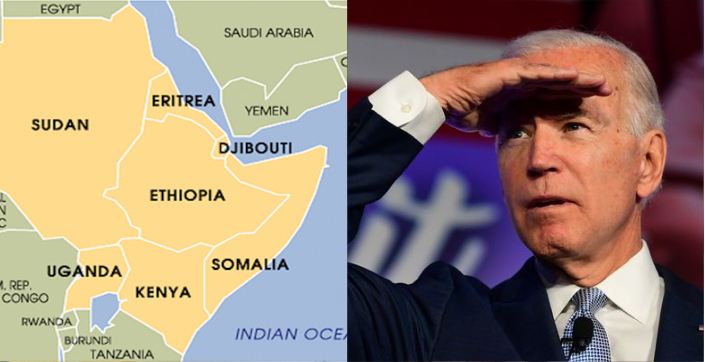

The US and the EU have most often taken Egypt’s side against Ethiopia in disputes over the GERD, and in one of President Trump’s last reckless moments in office, he said that Egypt wouldn’t be able to live with the dam, so they’ll blow it up , but it’s hard to imagine that Egypt would attempt such an attack without a green light from the US.
At the time, the Ethiopian Foreign Ministry issued a statement saying, “The incitement of war between Ethiopia and Egypt from a sitting US president neither reflects the longstanding partnership and strategic alliance between Ethiopia and the United States nor is acceptable in international law governing interstate relations.”
“The dam promises to lift Ethiopia’s subsistence farming majority from poverty, generate electricity for sale to neighboring nations, and make Ethiopia a regional powerhouse.
Russia and China have most often sided with Ethiopia about the GERD, and China is heavily invested in its electricity delivery infrastructure. The $4.6 billion dam itself has been financed by taxes and bonds issued to Ethiopians and the Ethiopian diaspora.
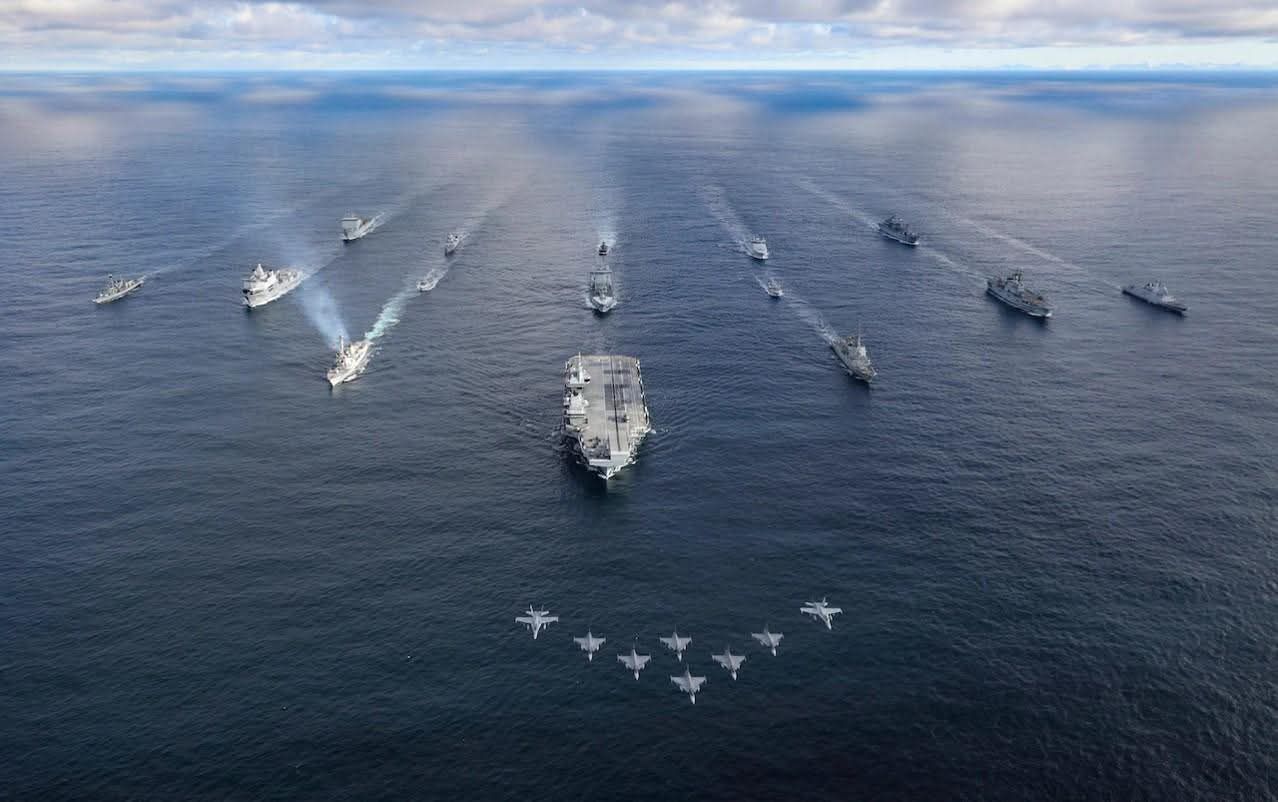
Russia is rumored to be helping Ethiopia guard the dam, and on July 7, 2021, Russia and Ethiopia inked a new military cooperation agreement . On March 28, 2021, China and Ethiopia signed “an agreement to protect investment projects .” China has significant investments in all three nations involved in this particular dispute over Nile waters.
Russia and France have been claiming a share of the Egyptian weapons market previously held by the US since 2015, a development that National Defense News recently identified as a national security issue .
Last week, the UN Security Council met to consider a draft resolution put forth by Egypt and Sudan that would call on Ethiopia to halt the second seasonal filling of the dam. Everyone who spoke during the meeting called for a return to African Union negotiations despite a 10-year impasse, but the Western ambassadors were more sympathetic to Egypt and Sudan, the Russian ambassador was more sympathetic to Ethiopia, and the Chinese ambassador appeared to be attempting to remain neutral.
Egypt and Sudan both emphasized the importance of the issue to them by sending their foreign ministers to speak instead of leaving that to their ambassadors, while Ethiopia sent their Minister of Water and Irrigation. Here are a few of their remarks:
Egyptian Foreign Minister Sameh Hassan Shoukry: All that Egypt has called for and sought is a binding agreement that includes an insurance policy against the harmful impacts of the GERD on Egypt’s water security, by designing a mechanism through which our three countries could cooperate to collectively bear the burden of addressing future periods of droughts.
Unfortunately, however, Ethiopia remains steadfast in its rejection of any form of agreement that provides any meaningful measure of protection to the interests of downstream states. For us, the harm that the GERD might inflict will affect every aspect of the lives of the Egyptian people like a malignant plague. In the absence of an agreement that regulates its filling and operation, the GERD can cause cumulative water shortages in Egypt amounting to 120 billion cubic meters.
It will diminish access to clean drinking water. It could deprive millions of farmers of the water they used to irrigate their fields. It will rob countless families of their income and livelihood. It will destroy 1000s of acres of arable land. It will increase desertification and degrade the riparian ecosystem, and it will increase vulnerability to the effects of climate change. This is a situation that Egypt cannot and will not tolerate.
Sudanese Foreign Minister Mariam Al-Sadiq Al-Mahdi: We dearly hope that the Council will assume its responsibilities in maintaining regional peace and security in a preventative way by strengthening stepping up negotiations under the auspices of the African Union. I should like to say, unequivocally, that this issue is a just cause. You are called, ladies and gentlemen, to promote a process which continues to meet obstacles, and you can help this process easily, freely, by freeing the courageous people of Sudan from their current suffering by ensuring that the filling and functioning of the Renaissance Dam happens pursuant to a legally binding agreement. However, silence from the Council would send out the wrong message and would signify a tacit approval of the fact that this unilateral filling was acceptable.
Ethiopian Minister of Water, Irrigation, and Energy Dr. Sileshi Bekele: Mr. President, colonialism and colonial treaties thwarted Africa’s ability to utilize its natural resources for the benefit of its people. The Nile Basin countries have recognized this problem and worked towards addressing it. In 1999, we established the Nile Basin Initiative, and in 2010, we adopted the Cooperative Framework Agreement, or CFA, on the Nile after 13 years of negotiations. The insatiable demands of Egypt and most recently Sudan are not mostly about the issue of the GERD but about the future development projects in Ethiopia and the other riparian countries. Without an effective CFA and regional mechanism, similar application will inevitably come to this Council. Today it is Ethiopia’s dam; tomorrow it will be any one of the Nile Basin countries.
The Nile belongs to all the people of the Basin countries, all the half a billion of us in the 11 riparian countries, and the water is enough for all of us. In this regard, we urge our Egyptian and Sudanese brothers and sisters to understand that a resolution to the Nile issue will not come from the Security Council. It can only come from good-faith negotiations, with due care for the well-being and development of each other. As Ethiopia looks forward to continuing the AU-led, trilateral negotiations on the GERD, we have the solution at hand, and we can herald the good news to the world led by concluding a mutually acceptable outcome.
Finally, Mr. President, allow me to respectfully request the Council to return this matter to the ability and the legitimate leadership of the African Union and encourage Egypt and Sudan to seriously and faithfully negotiate towards a negotiated settlement on the first filling, and on all operations of the GERD.
We also request the council to make this meeting the last of its deliberations on the Grand Ethiopian Renaissance Dam. There is no subject matter as far from the mandate of the Council as this one. I thank you.
(End of UNSC statements.)
The UNSC may vote on the resolution this week, despite Ethiopia’s request that the matter be sent straight back to the African Union. However, should there be a vote, deadlock between the five permanent members with veto power is all but certain.
I spoke with Mohamm e d Basheer, a civil engineering researcher at the University of Manchester about the Grand Ethiopian Renaissance Dam.
Ann Garrison: First, I believe your training is civil engineering and you teach that subject there at the University of Manchester, is that correct?
Mohammed Basheer: My training is in civil engineering, but I specialize in water resources management. So we look at how water resources can be used in the best way possible. And part of that is building dams and operating dams. But my focus is on research. I only do research.
AG: Okay, and what’s the name of the school there where you teach?
MB: The Mechanical, Aerospace and Civil Engineering Department of the University of Manchester.
AG: And are you or your family originally from Ethiopia or elsewhere in the Horn or the region?
MB: Yes. I’m originally from Sudan.
AG: Okay, I want to make it clear, I didn’t ask that question with any mistrust about how scientifically you’re approaching this. I just thought we should be upfront about it, given all the international tensions over the dam.
MB: Yeah, there’s no problem here. Yeah, that’s fine.
AG: Okay. I contacted you after reading a BBC article on the dam titled “River Nile dam: Why Ethiopia can’t stop it being filled ,” which quoted you. It said that Egypt and Sudan’s accusations against Ethiopia give the false impression that filling up the dam is like filling up a bath and that Ethiopia can turn a tap on and off at will. They quote you saying, for one, “Given the stage that the construction is at engineering wise, physics wise, there is no way to stop the filling now until the water level reaches the top of the dam wall.” Is that an accurate quote?
MB: Yes, yes. That’s an accurate quote. Yes.
AG: So does that mean that once the rainy season begins, the dam starts filling?
MB: Yes. So the way the dam has been designed is to fill up as it’s being constructed. So what happened in the past few years is that Ethiopia has been building the two sides of the dam— the left and right sides, on either side of the river—and leaving the middle part open. That means that now they’re building up the middle part of the dam during the dry season. That’s when the flow of water is low. That’s normally between November and June. So during that time, the river flow can be passed through the outlets of the dam. But once flood season starts from July to September, that’s the peak of the fall season, then the outlets will not have the capacity to pause the high flows of the flood season. That means automatically the reservoir will start filling up until the water level of the reservoir is the height of the middle wall, and then water will start flowing over the wall. So that means, because the outlets of the dam are too small to pass the entire flood wave, the reservoir will be filling up. In other words, because the wall is now constructed, there’s no way to stop the filling from happening. So the reservoir will start filling at least then, fill up to the level of the middle wall, and then water will start flowing over the wall.
AG: Does that mean over the wall into Sudan?
MB: Yes, that means to Sudan, downstream to Sudan and then to Egypt.
AG: Egypt and Sudan have a resolution under consideration at the UN Security Council which demands that Ethiopia stop the second filling of the dam. Does that make any sense in the circumstance?
MB: Physically, it’s not possible to solve the filling as I just explained, now. The decision to continue filling, in this second year of the filling, was already taken a long time ago by Ethiopia when that middle wall was being raised.
AG: So it’s not really possible to stop the second filling of the dam now, but it is possible to negotiate agreements about management of the dam here and going forward.
MB: We’re talking about only the second year of the filling. The filling goal is to continue in the next few years. So I think what Sudan, Ethiopia, and Egypt need to work on is an agreement for the subsequent years. And then also for the long-term operation.
AG: The dam is already producing some electricity, isn’t it?
MB: No, not yet. There needs to be a certain amount of water behind the reservoir for it to start generating electricity. But this is expected to happen this year.
AG: Sudan and Egypt are saying that they want to stop the second filling of the dam. Do you think that’s a misunderstanding of the engineering?
MB: No, I think they both know that the filling cannot be stopped now. In fact, in a press conferences in the past week that the Sudanese Water Ministers gave, he stated that the filling cannot be stopped now and the decision to fill the dam had already been made when Ethiopia started the building of that middle wall. So they know the engineering of the dam, they know that the filling cannot be stopped. I think what they are trying to do here is to make a statement that the filling shouldn’t have been carried out according to a unilateral Ethiopian decision made back in in April/ May, when that middle wall was being built.
AG: Some say that Egypt and, in turn, Sudan are not really concerned about their share of the Nile waters, but about the possibility that Ethiopia will rise to become a regional power rivaling Egypt. Does that make any sense to you as a civil engineer?
MB: No, it actually does not. I think both Egypt and Sudan would benefit from a stronger Ethiopia, a more stable Ethiopia, a more economically strong Ethiopia, because the ties between these three countries are quite strong. And both Sudan and Egypt expressed their support for Ethiopia’s development and Ethiopia’s use of the Nile water resources. I think the issue of Sudan and Egypt with the dam is they want to have certain assurances about their water security.
The problem with the dam is different for Egypt and for Sudan. For Sudan, what they want to know is how the dam will be operated, because the dam is very, very close to Sudan. So they want to have a mechanism for exchanging data and making sure that there are certain rules to govern changes and flows from one day to the next and etcetera. A lot of technical details. I think that, for Sudan, there have also been concerns because Sudan hasn’t received any final documents on the dam safety.
There are also some missing studies on the socioeconomic and environmental impacts of the dam for Egypt. What they worry about the most is how the dam would be operated during times of droughts. So that means that, if a drought happens, like the one that happened in the 1980s, when we had multiple years with very low flows, then how much water is going to be released from the GERD? Because that will impact the agricultural sector in Egypt. It will impact employment and the economy of Egypt as well.
Another concern is, following a drought, how will the reservoirs be recovered? Because, typically, after a drought, the reservoirs will be at a very low level. How fast will the GERD be filled up following a drought? Is the GERD going to be filled faster compared to the Aswan High Dam, which is also a very large dam located in Egypt?
So these are completely different issues, I think, for the two countries. And I think these are the concerns of the countries, but I believe that both Sudan and Egypt are not against the development of Ethiopia.
AG: That’s good to hear. We constantly hear the word famine associated with Ethiopia. The two words are almost irrevocably identified because of the great famines of previous decades and the massive charitable efforts to respond to them. Would the GERD be one of the best ways of protecting Ethiopia against famine in the future?
MB: So the Grand Ethiopian Renaissance Dam, it’s a hydropower dam, and it’s located next to the border with Sudan. That means it is used for hydropower generation only.
Of course, it will provide hydropower for Ethiopia’s different sectors and would enable the development of the economy. But again, it doesn’t provide water for irrigation or for other purposes. So it wouldn’t protect from famine in that sense, because the GERD does not provide water for agriculture.
AG: But possibly the electricity could be used to power irrigation systems. Does that make sense?
MB: That could be one way to look at it. So yeah, because electricity is an input to many, many activities in the economy, it can be used as well to pump water from groundwater to power food production and so on. But the impact is indirect. It’s not directly from the GERD but through the hydro power that the GERD generates.
AG: Last year, according to the BBC, Sudan was taken by surprise when Ethiopia shut three of the four diversion outlets for the water. This led to lower levels downstream, which disrupted Sudan’s pumping stations for irrigation and municipal water supply. If that’s true, then it does seem that Sudan and Egypt have legitimate concerns about their share of the Blue Nile waters.
MB: Yes. Last year, Egypt didn’t have any problems because the flow was very high. And Egypt has the Aswan High Dam which has a huge water wall, and that can be used to mitigate any reductions in the Nile flow from Ethiopia as a result of GERD filling, at least in the short term.
For Sudan, the situation is different because the GERD is located very, very close to Sudan, and there is no large reservoir in Sudan that is capable of storing a lot of water. So what happened last year was that, when the filling started, three of the gates were closed and only one was open, which resulted in a sharp drop in the river flow. And that resulted also in a sharp drop in river water levels. And that left a lot of the inlets of pumping stations along the Blue Nile out of the river. And that resulted in drinking water supply stations going out of service. That could have been avoided. If there was clear communication with Ethiopia about the filling process–how much water would be released and when the filling was going to be started–Sudan could have taken some measures to mitigate that. But because there was no exchange of information, and because that process was unilateral, Sudan wasn’t aware of it. That caused the damage. So one of the lowest levels of coordination is trans-boundary river exchanges of information. If that was available, Sudan wouldn’t have suffered from the first year filling.
AG: The UN Security Council is considering this as a matter of war and peace. And in one BBC report, they said there’s really nothing Egypt can do about this now, unless it wants to go to war with Ethiopia, a horrible prospect, or do you think that can be avoided?
MB: Definitely war is the worst solution. And in fact, it’s not a solution, because it creates more problems than it solves. Anything that war can provide can instead be gained from talks and negotiations. So I think there is absolutely no need to go into war for negotiations over this dam on the Nile waters. Talks and negotiations can resolve this issue. And I don’t think Egypt would turn to that solution.
AG: The other day, you told me that the US and Mexico had renegotiated the treaty regarding the Colorado River Basin 300 times and that something like that kind of cooperation is needed here. Could you say a little more about that?
MB: Yes. So one of the concerns of Ethiopia is that if they enter into a binding agreement, it might constrain their use of the river in the future. And indeed if, for example, they committed to releasing certain water volumes in the drought to the downstream, then they will have to continue doing that. And that will impact the way water is used in the upstream.
Now, there are solutions that have been done elsewhere in other places in the world. And there is an example from the Colorado River Basin. There was a treaty between the US and Mexico about the management of the river, and they actually introduced changes to this treaty in minutes. So they made the changes in the regular meeting minutes, and then they added them to the agreement. And that has been done quite a lot. That is an example that Ethiopia, Sudan and Egypt could follow in addressing Ethiopia’s concern about the GERD now, but they could also be open to meeting again in the future when Ethiopia decides to go on with their further plans, and then come up with new minutes and add them to the agreement.
The idea is to have flexibility, legal flexibility, to accommodate future uncertainties.
AG: Human and climatic situations are both fluid, right?
MB: Yeah, that’s right. We still don’t know how climate change is going to impact the Nile flow. So some studies show that climate change will increase the Nile flows; some studies show that it will decrease the flows. So all these factors will need to be taken into account as they unfold.
And there are also uncertainties around population growth and about the paths that countries will take to economic development. All these are going to impact the demand for water resources in the region. And these would have to be taken into account, or at least we should have the flexibility to accommodate these changes in any agreement about water management.
AG: So the three countries have to negotiate and continue negotiating well into the future?
MB: Yes, definitely. I think what they need to do is try to think a little bit creatively. So instead of trying to figure out ways to share the water resources, I think they should start thinking about sharing the benefits that the water resources would generate. And this is a very well known concept now in very basic management. It’s called sharing benefits. Because each of the countries has different potentials and different resources. Ethiopia has high hydropower potential. Sudan has great agricultural potential. Egypt has expertise and a long history in agriculture and agriculture-related industries. So if all these aspects were brought together in a collaborative framework, then the Nile water would be enough for everyone to obtain the benefits that they want.
AG: Okay, I’ve done my best trying to make sense of this, not being an engineer. Is there anything else you think we should understand that I haven’t touched on?
MB: No, no, I think I think we covered pretty much all the points. But again, I mean, the last thing maybe I want to finish with is negotiations is the way to solve this, but the three countries need to figure out different ways to negotiate because the negotiations have been going on for over 10 years now, and there’s still no solution. That means the negotiations need to be set up differently to reach a solution as soon as possible.
AG: Mohammed Basheer, thanks for speaking to Black Agenda Report.
MB: Thank you very much for having me.
Mohammed Basheer does research and teaches at the Mechanical, Aerospace and Civil Engineering Department of the University of Manchester, United Kingdom. He is originally from Sudan.
Ann Garrison is a Black Agenda Report Contributing Editor based in the San Francisco Bay Area. In 2014, she received the Victoire Ingabire Umuhoza Democracy and Peace Prize for promoting peace through her reporting on conflict in the African Great Lakes Region. She can be reached on Twitter @AnnGarrison and at ann(at)anngarrison(dot)com.
COMMENTS?
Please join the conversation on Black Agenda Report’s Facebook page at http://facebook.com/blackagendareport
Or, you can comment by emailing us at comments@blackagendareport.com

Ethiopian Conflict and International
That’s a legitimate, as long as they are letting aid in. They can check it for weapons. Sure. I don’t see any legal problem with that. Ann Garrison, BAR Contributing Editor 08 Jul 2021 Legal…
Keep reading- President Taye champions Africa’s dev’t and regional transformation with GERD at UNGA 80In a comprehensive address to the 80th session of the United Nations General Assembly in New York, President Taye Atske-Selassie of Ethiopia underscored… Read more: President Taye champions Africa’s dev’t and regional transformation with GERD at UNGA 80
- Two African countries refuse to recognise Palestine. Here’s whyAt the United Nations General Assembly this week, one country after another rose to declare its recognition of a Palestinian state. Britain, Canada,… Read more: Two African countries refuse to recognise Palestine. Here’s why
- UN Chief Stresses Need for Countries to Adopt Climate-smart Food Policies to Reduce Reliance on Food ImportsUN Secretary-General Antonio Guterres stressed the need for countries to adopt climate-smart food policies and enhance private sector participation to reduce reliance on… Read more: UN Chief Stresses Need for Countries to Adopt Climate-smart Food Policies to Reduce Reliance on Food Imports
- Puntland Intercepts Cargo Ship Carrying Weapons To MogadishuByMI News Network Authorities in Somalia’s semi-autonomous Puntland region have intercepted a cargo vessel which was carrying a massive consignment of military vehicles… Read more: Puntland Intercepts Cargo Ship Carrying Weapons To Mogadishu
- Burkina Faso ruling junta dissolves independent electoral commissionThe Burkinabe government adopted a bill on Wednesday at the Council of Ministers to dissolve the Independent National Electoral Commission (CENI). According to… Read more: Burkina Faso ruling junta dissolves independent electoral commission